Tuesday, June 13, 2017

Polonia and Casariche met to each other

Polonia is one of the countries in Europe which are very conscient about the education. We had the chance to meet a great school team. A great group of people from Konin decided to come to our school and learn about our children, teachers and kind of work with the youngest students.


They visited our classrooms for about a week and they also had the oportunity of learning about our culture, folklore and history around.


They participated in activities that our teacher did with our students:


A brief summary of Konin:
Konin is a town with county status (urban county) situated in central Poland. It is located in the western part of Wielkopolskie Voivodeship (Province) on the Warta River. Taking into account the population density, Konin is the third town in the voivodeship (just after Poznań and Kalisz).

As a settlement located on the islet in the Warta River, Konin was guarding the ford across the river. Moreover, important trade routes between Kalisz and Kruszwica have always run through the town. Today, Konin is a town with a 700 years old history. It obtained town rights and location privilege according to German Magdeburg law before 1293.

Although in 1331 the knights of Teutonic Order completely destroyed the town, in the years 1330-1370 it was restored by the king Casimir the Great and surrounded by fortifications; the court was established at that time.

Due to the lack of wars and invasions, various crafts developed and proved a favourable economic condition of the town. Numerous Polish monarchs visited the place, among them were Casimir the Great, Casimir Jagiellon and Ladislaus Jagiello.

Unfortunately the economic growth of town was drastically interrupted in the first part of the 17th century. The numerous fires sweeping the town accompanied the plagues which tormented Konin in the years 1628-1631. Few years later, in 1655, the town was occupied and robbed by the Swedes.

After the Prussian annexation, Konin became a part of the Grand Duchy of Warsaw. Yet following Napoleon's defeat and the fall of the Grand Duchy of Warsaw, the town belonged to the Polish Duchy, the so-called Congress Duchy.

The regaining of independence in 1918 did not bring about the expected growth, as Konin was a small town out of the way of the trade routes. The revival started only after the opening of a railway line joining Poznań with Kutno and the construction of the Warta - Gopło Canal (1920s).

After World War II, one could observe constant economic development of the town related mainly to the construction of strip mines in the area. After the power plant and aluminium works were opened, Konin has become an important centre for the energy and mining industries.

In the years 1975-1998 Konin was the capital of the voivodeship; however, due to the administrative reform in 1999, the town became a capital of Konin Poviat. Today Konin constitutes a significant administrative unit as well as important centre of political ans social life.

Wednesday, April 19, 2017

Easter Egg Hunting

Once again, children did the Easter Egg Hunting activity in our school CEIP Lope de Vega.


Sunday, March 26, 2017

Spelling Bee Contest 2017

One more year, our school celebrate the 8th Spelling Bee Competition. All students are getting ready for this events and some of them already got a place to this exciting and didactic contest. 


Saint Patrick's Day

St. Patrick’s Festival was established by the Government of Ireland in November 1995.

The principal aim of St. Patrick’s Festival, since its inauguration, is to develop a major annual international festival around the national holiday over which the ‘owners’ of the festival, the Irish people, would stand proud. It sets out to reflect the talents and achievements of Irish people on many national and world stages, and it acts as an exciting showcase for the manifold skills of the people of Ireland, of every age and social background.
As the one national holiday that is celebrated in more countries around the world than any other, St. Patrick’s Day is the day when everyone wants to be Irish.
We set out to seize that opportunity, and completely transform the national and international perception of St. Patrick’s Day in Dublin. This country is bursting with the kind of creative energy, ideas and enthusiasm required to do the job. Our job has been to harness them, and make our national holiday an unforgettable experience for all.
GOVERNANCE
St. Patrick’s Festival is governed by a voluntary board of Directors, see a list of Directors on the Team page.
St. Patrick’s Festival is committed to good governance and the organisation complies with all regulatory requirements and operates in accordance with its governing document, available here. Memoandarts2.pdf
St. Patrick’s Festival keeps detailed books and records of accounts and maintains strict financial controls. The organisation is transparent in its audited financial statements, with most recent statements (2015) available here Audited_accounts_2015_CRA_Upload.pdf.
http://www.stpatricksfestival.ie/info

Why was it started?


  • To offer a national festival that ranks amongst all of the greatest celebration in the world.
  • To create energy and excitement throughout Ireland via innovation, creativity, grassroots involvement, and marketing activity.
  • To provide the opportunity and motivation for people of Irish descent (and those who sometimes wish they were Irish) to attend and join in the imaginative and expressive celebrations.
  • To project, internationally, an accurate image of Ireland as a creative, professional and sophisticated country with wide appeal.
The first St. Patrick’s Festival was held over one day, and night, on March 17th 1996, it has since grown to a 4-5 day celebration.


Other interesting link:
St. Patrick's Day (Saint Patrick's Day, irl. Lá 'le Pádraig or Lá Fhéile Pádraig) - Irish national and religious holiday celebrated on March 17. It is named after Saint Patrick, the saint patron of Ireland.
St. Patrick's Day is a day off from work in Ireland, Northern Ireland Newfoundland and Labrador. The most important tradition of celebrations of St. Patrick's Day is wearing clothes in green. Green is the national color of Ireland, referring to the grassy landscape of the island and shamrock traditionally attributed to St. Patrick. Irish in many cities organize festivals and street parades, in which dominates just green.
Saint Patrick's Day is widely recognized and also celebrated in the United States. It is observed as a celebration of Irish and Irish-American culture. Celebrations include religious observances, numerous parades, eating and drinking. The holiday is celebrated on the North American continent since the late eighteenth century.
https://www.calendar-12.com/holidays/saint_patricks_day/2017

St. Patrick's Day in the United States

St Patrick's Day, on March 17, remembers one of Ireland’s patron saints, St Patrick. It largely celebrates Irish-American culture in the United States.

Celebrate St Patrick's Day

Celebrations concentrate on Irish themed parties, drinks and food. Many people get into the spirit by dressing in green clothing and eating green colored food. Irish clubs and pubs often hold parties or have special deals. Large street parades mark St Patrick's Day in places like:
  • Savannah
  • Chicago
  • Boston
  • Houston
  • Philadelphia
  • Pittsburgh
  • Denver
  • Detroit
  • Toronto
  • New York
  • New Orleans
  • Seattle


Blacklight Symphonies Performance in CASARICHE


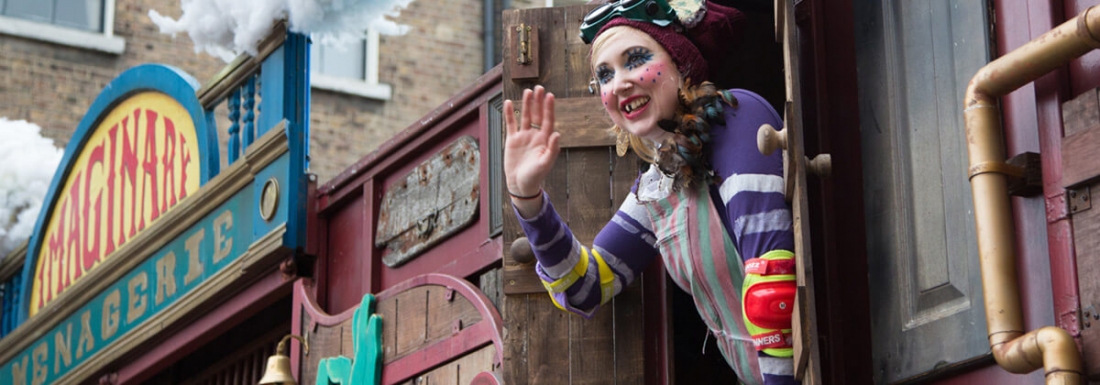
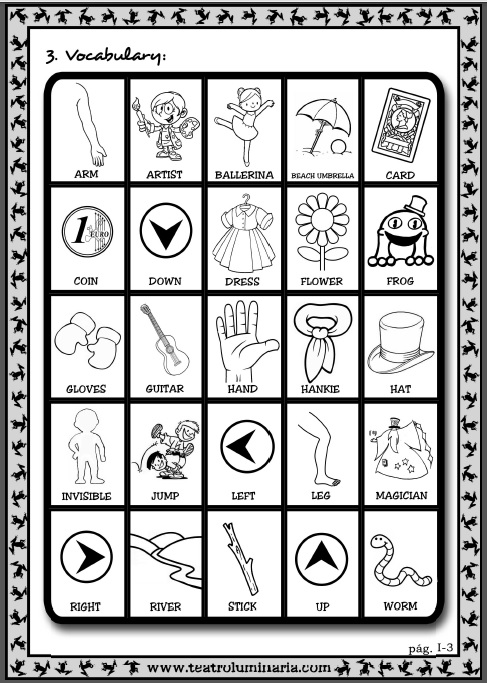
'Blacklight Symphonies' is a story with too much fun. Two frogs are the main characters, their names are Norman and Billy. They tell us the adventures of Drake, the magician, who show us a very wonderful and magic show since 1881.
We can also be with Rory, a farmer, who will introduce the great Genius 'El Botijo', who gives him a wish. 
At the end, the story of the most famous 'Invisible Ballerina'.
All of this and more in Blacklight Symphonies, 50 minutes of fun, adventures, love, laugh, dancing, talking frogs and magic objects which we get involved in and they make us lose the sense of time. 

Blacklight Symphonies es una divertida historia de... ¡un momento!, son ¡tres divertidas historias! narradas a través de los ojos de dos ranas de la especie imago proiectis*, llamados Norman y Billy.

Con ellos, descubriremos las aventuras de Drake, el mago, donde seremos testigos de su único show mágico celebrado en 1881.

También, podremos acompañar a Rory, el granjero, que encontrará al mismisimo Genio del Botijo, al que le pedirá su mayor deseo.

Y, finalmente, la historia de la más famosa bailarina del mundo mundial, la increible ‘Bailarina Invisible’.

Esto y mucho más es Blacklight Symphonies, 50 minutos de diversión, aventuras, amor, risas, danza, ranas parlantes y objetos mágicos que envolverán de magia todo el escenario.


https://www.youtube.com/watch?v=kLUVMzSYX7s


If you want to know more about this wonderful company, you can visit its page in Facebook: 

https://www.facebook.com/teatroluminaria/

Friday, March 10, 2017

Our creations. English is fun in CEIP Lope de Vega.

It has been since October that some groups of students at school have been creating their own projects and works in English. They have had models for their creations and they were having fun all the time they were using for those goals. They created songs, chants and they made drawings about some of the information they got from different topics in English.


Too many differents versions of a song about CLOTHES:


Too many different versions of a song about Weather and feelings:


Too many different versions of a rap about Means of Transport:


Too many examples of drawings about Yellowstone National Park:


Other drawings describing the means of transport you can see in places like cities, parks, rivers, ...